This complete guide to SodaBurn weight management support covers what the product is, how it is meant to be used and what role a liquid supplement can realistically play next to food, sleep and movement.
- SodaBurn is a support product, not a weight-loss treatment
- Six named ingredients, two caffeine sources
- Habits matter more than any ingredient
- Judge the product over weeks using simple measures
What 'weight management support' means
Weight management support is a marketing phrase with a narrow meaning: the formula includes ingredients that researchers have looked at in relation to metabolism, appetite or energy. It does not mean the product treats obesity or guarantees weight loss. The site is careful to say that benefits depend on diet, activity and consistency.
The foundations first
It helps to be clear about what a liquid supplement can and cannot do. Lasting weight management is built on food choices, portion sizes, sleep, stress and movement, which is what the NIDDK weight-management guidance describes. The NIH's fact sheet on weight-loss supplements notes that evidence for most of them is limited and that some carry safety concerns.
Seen this way, SodaBurn fits best as one part of a routine you already have, not as a substitute for it. If you are overweight or have a medical condition, a doctor or registered dietitian can give you a plan that a supplement cannot.
| Ingredient | Traditionally used for | Caffeine source? | Evidence in people |
|---|---|---|---|
| Chromium | Insulin and carbohydrate handling | No | Little or no effect on weight in most trials |
| African Mango Seed | Appetite and weight | No | Small, short trials; low certainty |
| Green Tea Leaf | Antioxidants and metabolism | Yes (natural) | Modest and mixed; rare liver reports with concentrated extracts |
| Guarana Seed | Energy and alertness | Yes (natural, concentrated) | Caffeine effect is real; weight evidence is limited |
| Maca Root | Vitality and stamina | No | Small studies on mood and libido; none for weight |
| Grape Seed Extract | Antioxidant polyphenols | No | Small studies, mostly on blood pressure |
The website does not publish per-ingredient amounts. The evidence column is a plain summary of research on each ingredient, not a claim about the finished product.
What is in the bottle
SodaBurn names six ingredients: Chromium, African Mango Seed Extract, Green Tea Leaf Extract, Guarana Seed Extract, Maca Root Extract and Grape Seed Extract. The website describes it as a once-daily liquid dropper, with the direction to shake well and take 1 to 2 droppers a day in water. What it does not do is publish an amount for each ingredient or a full Supplement Facts panel, so the formula is named but not measured.
That distinction matters. Knowing the ingredient list lets you look up each one, but without amounts you cannot say whether a dose resembles what researchers studied, how much caffeine a serving delivers or whether a precaution for a specific ingredient applies at this level. Before ordering, check the panel on the bottle or ask support for it.
The dropper format
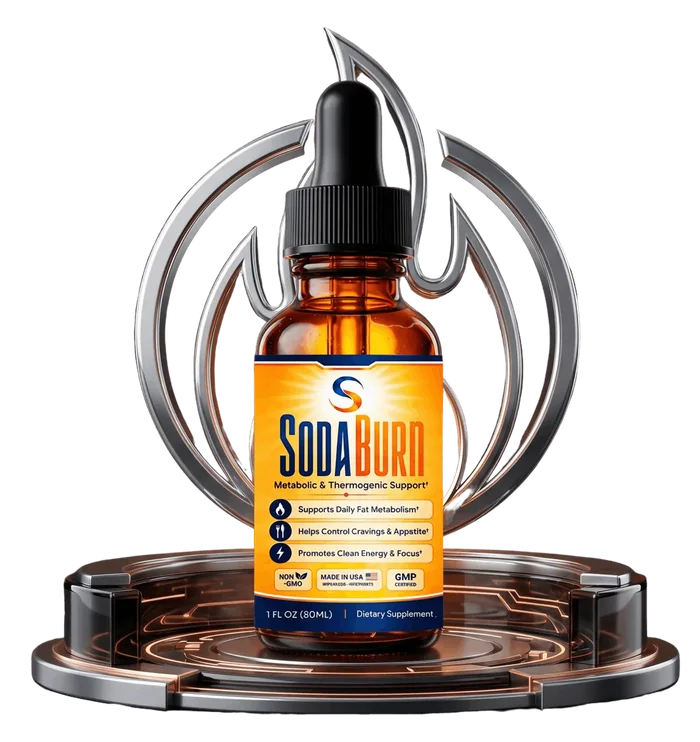
SodaBurn is sold as a liquid in a dropper bottle, not as a capsule. You shake the bottle, draw 1 to 2 droppers and add it to water or a morning drink. Many people like a liquid because it is easy to adjust and does not require swallowing pills, though the taste (which readers describe as fine in water) and the need to measure each serving are trade-offs.
One detail to check on your own bottle: the site lists the size as 1 fl oz, while the bottle artwork reads 1 FL OZ (80 ML). Those two figures do not match, since 1 fl oz is roughly 30 mL. The likely explanation is an artwork error, but it is worth reading the printed volume and the servings per container on the bottle you receive.
How it is meant to be used
Think of usage as three steps: shake the bottle, draw the amount the label directs (1 to 2 droppers) and mix it into a glass of water or a morning drink. Taking it at the same time each day makes it easier to notice how you respond and to build a habit.
Do not exceed the directions in the hope of faster results. If you feel jittery, uncomfortable or unwell, reduce or stop and talk to a clinician.
Safety basics
The site's own safety text covers the basics: SodaBurn is not FDA-approved (no dietary supplement can be), it is not a substitute for medication or medical treatment, it contains natural caffeine from green tea leaf and guarana, and anyone who is pregnant, nursing, under 18 or has a medical condition should consult a healthcare professional first. Because amounts are not published, that last point covers more people than it sounds: those on diabetes medicine (chromium), blood thinners (grape seed, green tea), thyroid or hormone-related treatment (maca), or heart, blood-pressure, anxiety or liver conditions.
Stop and seek advice if you notice a racing heart, chest pain, severe headache, yellowing of the skin or eyes, dark urine or persistent stomach pain. See NCCIH's guidance on using supplements wisely and NIH's consumer fact sheet.
A sensible way forward
Use SodaBurn, if you choose to, as a small add-on to a routine you already follow. If you want a structured plan, a registered dietitian can help. See how to use SodaBurn as part of a healthy lifestyle and how it may fit into your routine.
Related reading: Is SodaBurn Worth Trying for Weight Management?; SodaBurn Benefits and What Users Should Know; Where to Buy SodaBurn Online: What You Should Check First; SodaBurn Official Website: How to Find the Right Product.
Frequently asked questions
Is SodaBurn a weight-loss product?
It is a dietary supplement positioned for metabolic and appetite support. It does not treat any condition.
Can it replace diet and exercise?
No. Habits are the main driver of weight management.
How should I measure progress?
Track waist, weight trend, energy, appetite and sleep every two weeks.
Sources and further reading
General background from government and reference sources. They describe the ingredients and supplement safety in general, not SodaBurn itself, which has no published clinical trial.